Book Categories:

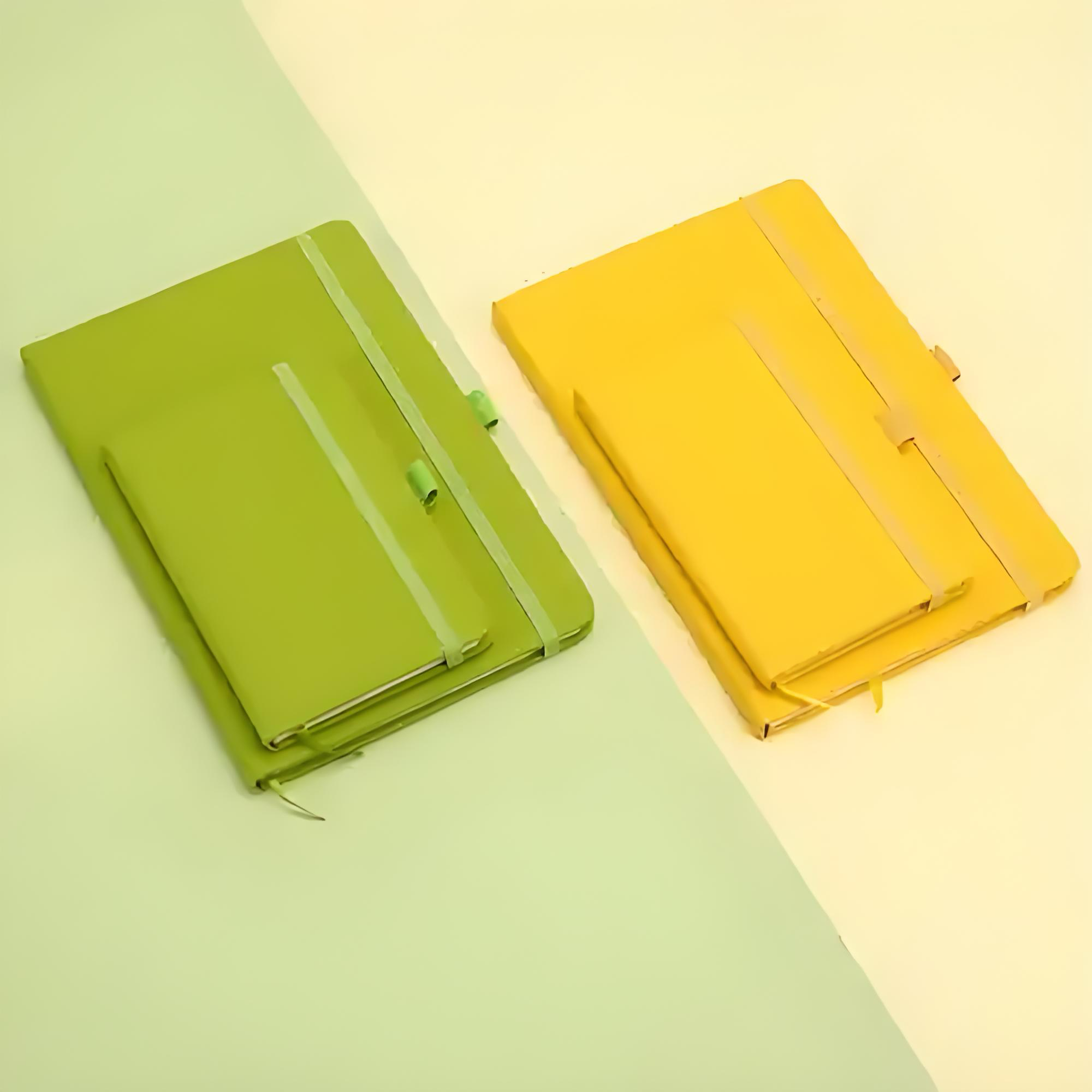

Partial UV, debossing & embossing, foil stamping, film lamination and texture embossing are the mainstream cover techniques for custom notebooks, helping you avoid mistakes when customizing notebook covers.
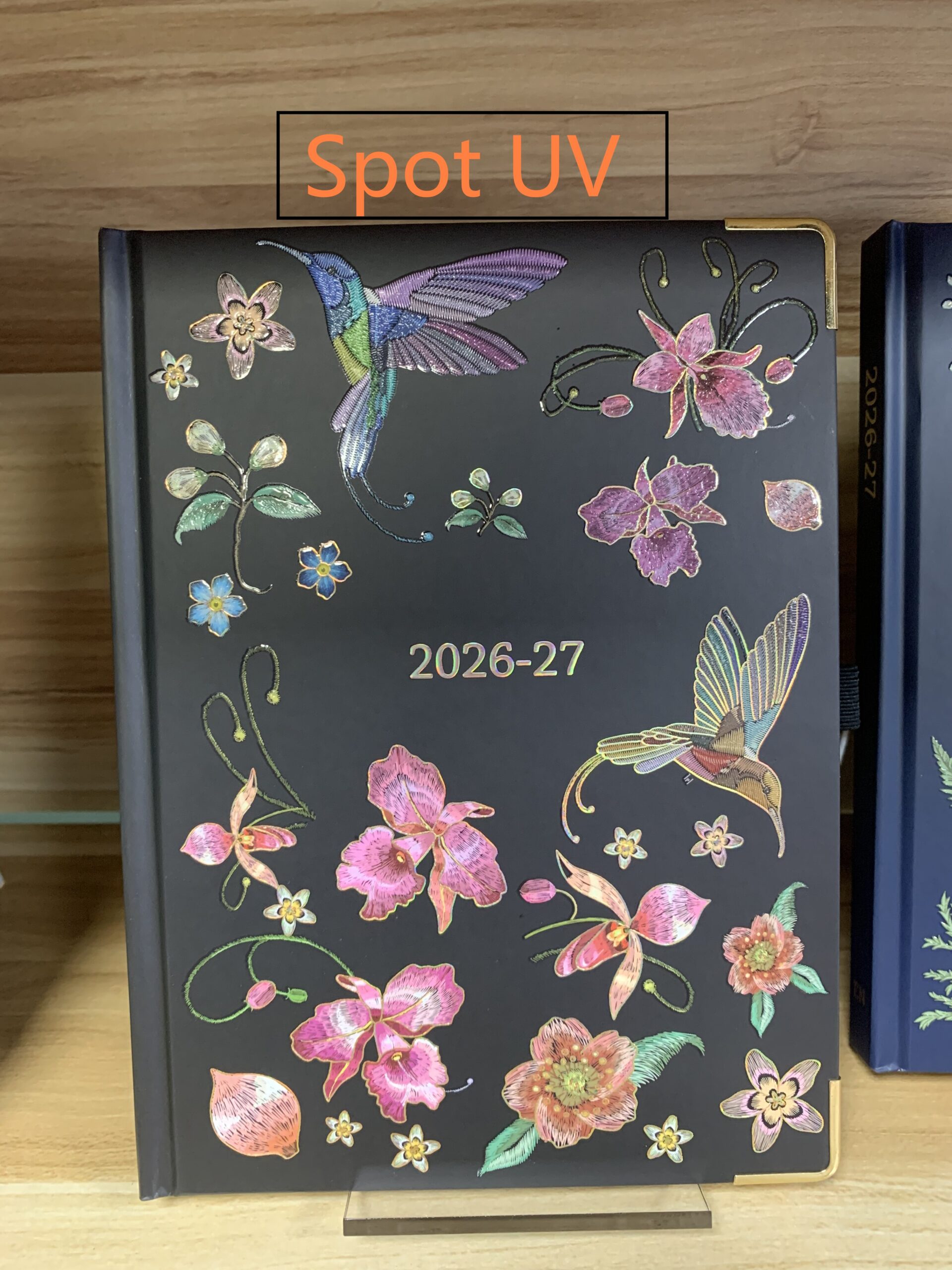
Partial UV
Partial UV means coating partial areas of the printed cover with transparent glossy varnish to make patterns shine brightly.
✅ Core Advantages
- Vivid gloss and distinctive visual effect
- Moderate cost with high cost performance
- Ideal for young, trendy and creative customer groups
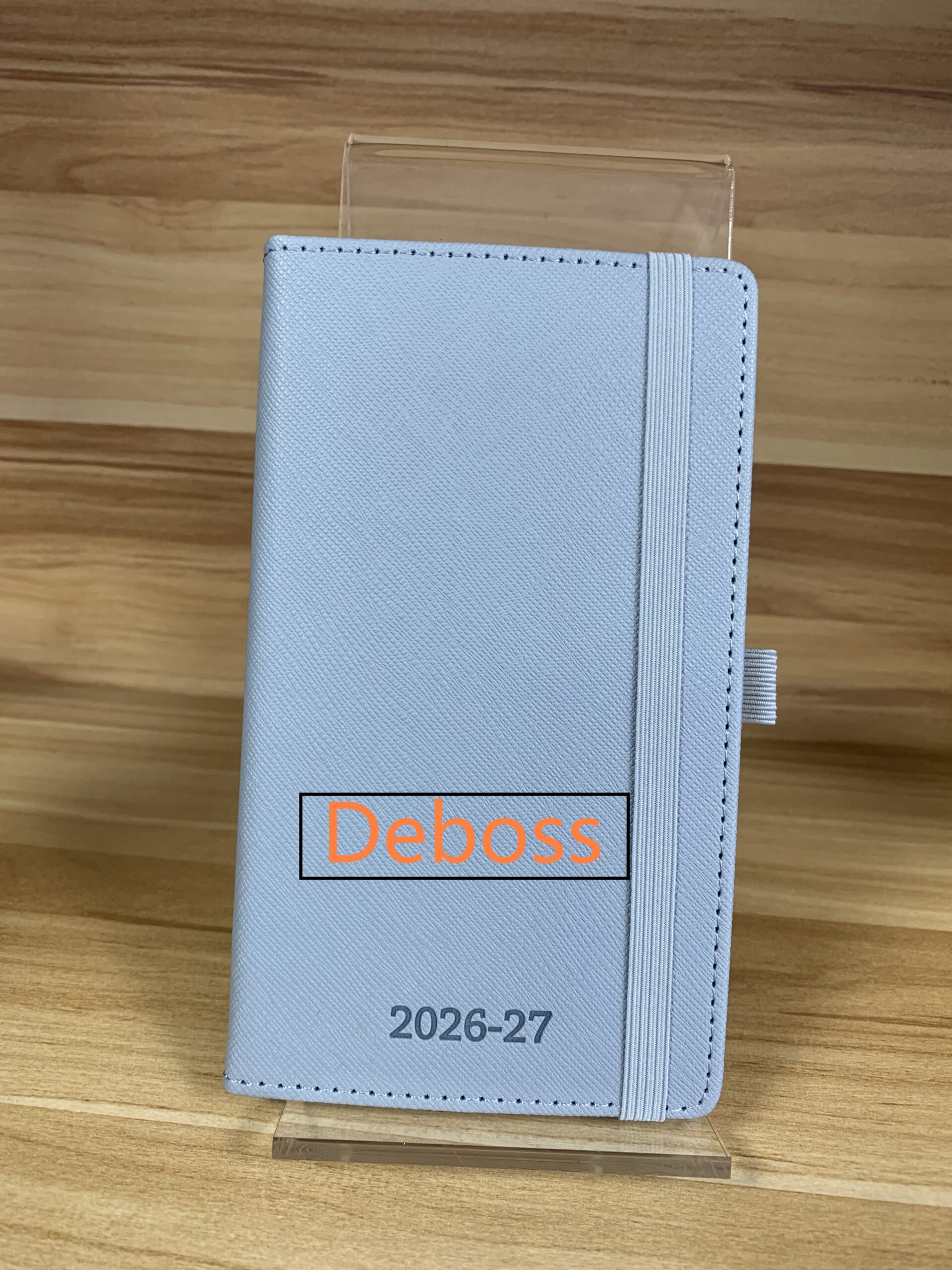
Debossing
Debossing presses patterns inward into the material with high-precision metal molds under high pressure.
✅ Core Advantages
- Strong craftsmanship that showcases premium production quality
- Boosts brand recognition through tactile feeling
- Perfect for pairing with foil stamping and other processes
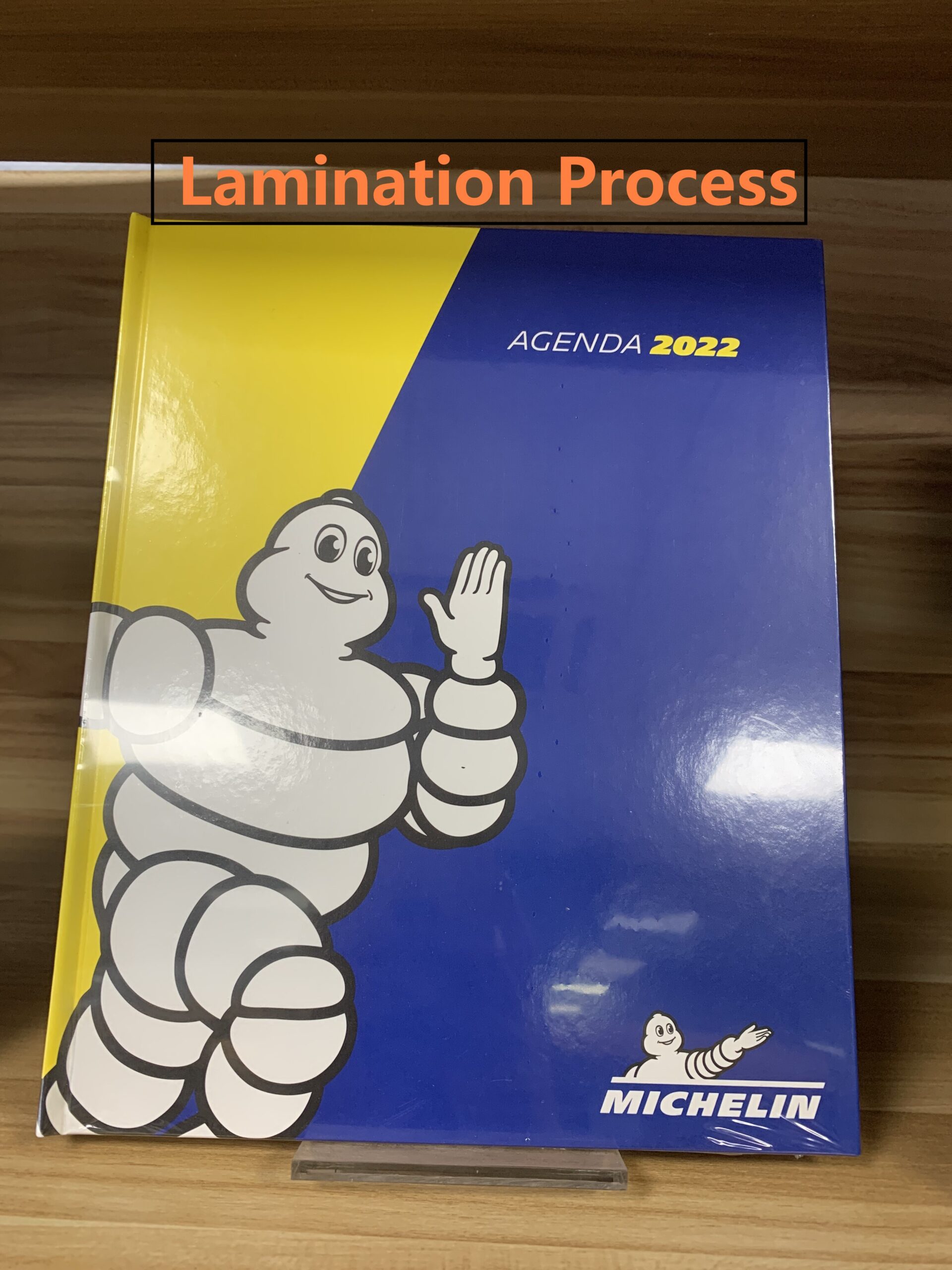
Film Lamination
Film lamination applies a transparent protective film over the printed notebook cover to safeguard the surface and upgrade texture.
✅ Core Advantages
- Scratch-proof, waterproof and fingerprint-resistant
- Improves printing definition and overall texture
- Soft-touch film delivers premium matte skin feel
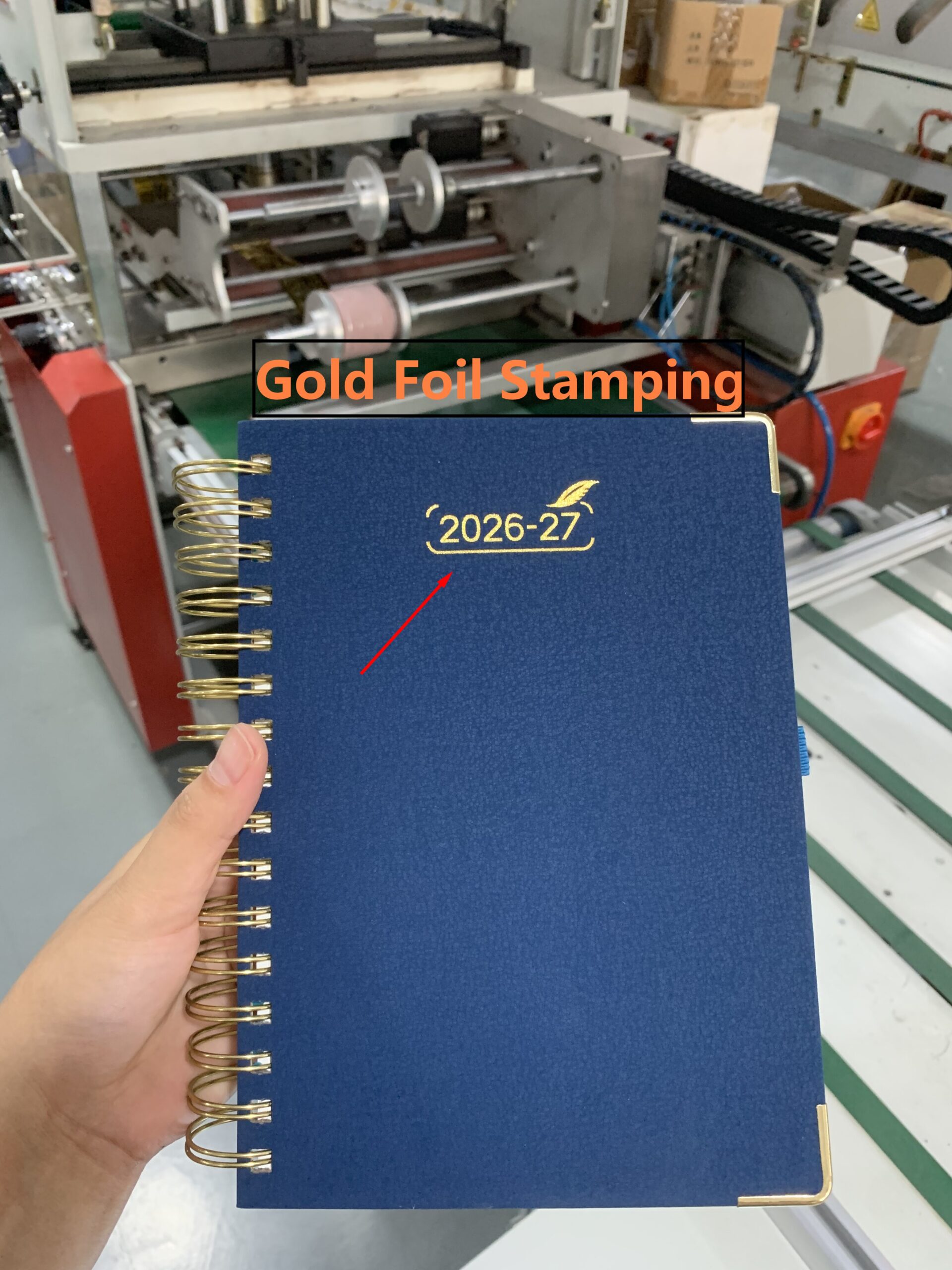
Foil Stamping
Foil stamping transfers metallic or colored foil onto cover surfaces via high temperature and pressure, creating highly opaque, reflective finishes.
✅ Core Advantages
- Greatly elevates initial premium impression of products
- Striking contrast on dark or matte base materials
- Wide color options: gold, silver, bronze, holographic, matte foil and more
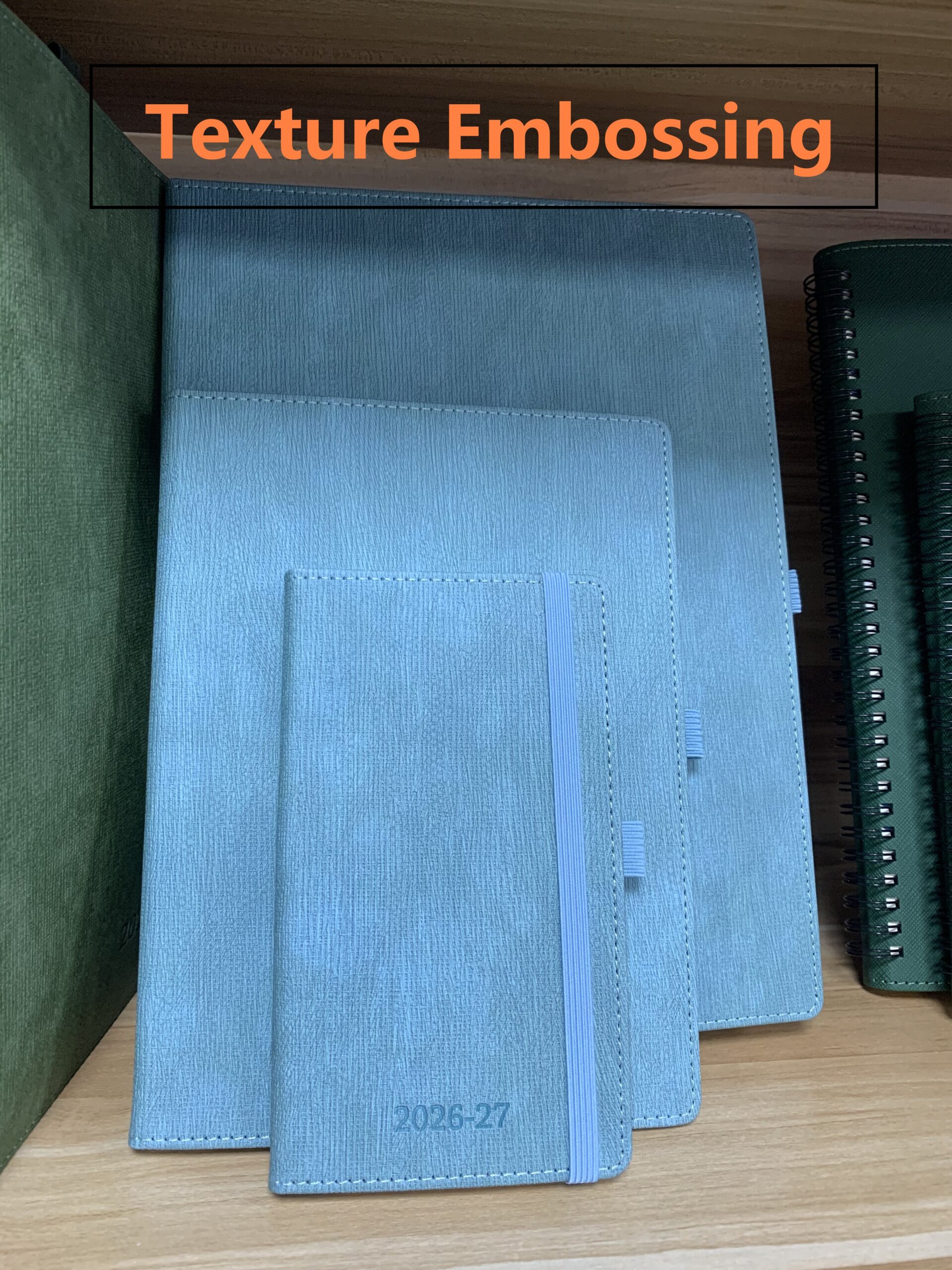
Texture Embossing
Texture embossing imprints textures onto paper surfaces, such as faux leather grain and cloth texture.
✅ Core Advantages
- Understated luxury, matching minimalist European and American aesthetics
- Wear-resistant, durable and fade-resistant
- Unique tactile experience for end users
Trends may shift, yet one truth remains unchanged: superior cover craftsmanship elevates both product grade and brand image simultaneously.